The Appian Way and the Catacombs of Rome
Catacombs Rome Appian Way: why the road is lined with tombs, how long it really is, and what else to see along it.
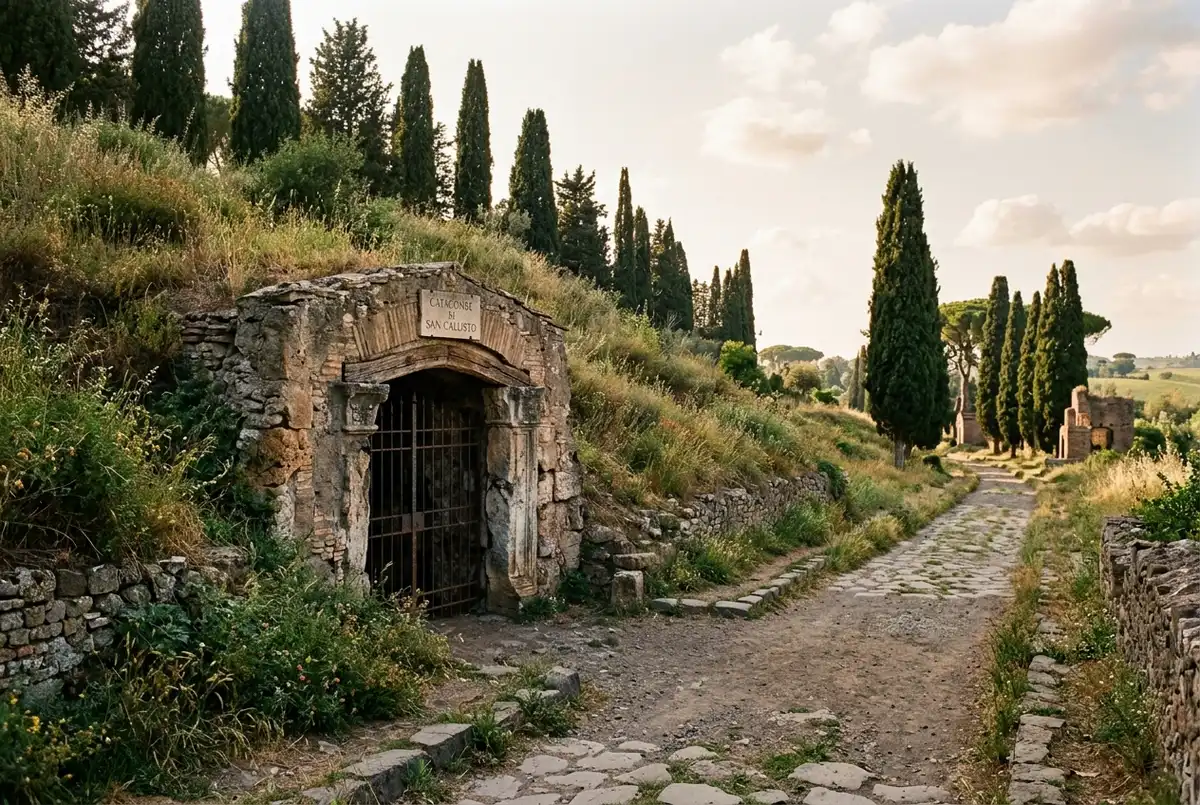
The catacombs of Rome cluster along the Appian Way because Roman law banned burial inside the city walls, so cemeteries lined the consular roads leading out. The road's officially protected stretch near Rome runs about 12 km, far shorter than the full 540 km ancient route.
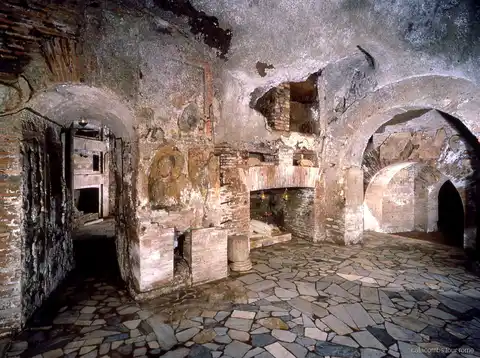 Catacombs of San Callisto Entry Ticket and Guided Tour From $15.35 · Cheapest real catacombs ticket See dates
On this page 6 sections
Catacombs rome appian way visits almost always mean one short stretch of a much longer road. The Via Appia Antica is where Rome banned its burials, which is why San Callisto, Domitilla and San Sebastiano all sit along the same few kilometers rather than scattered across the city.
Where is the Appian Way in Rome?
The road starts near the Baths of Caracalla, just south of central Rome, and its first stretch carries ordinary traffic rather than ancient stone. The official park describes the first 4 km as a section where the ancient roadway is no longer visible, so visitors reach the main monuments by walking the modern Viale delle Terme di Caracalla and Via di Porta San Sebastiano instead.
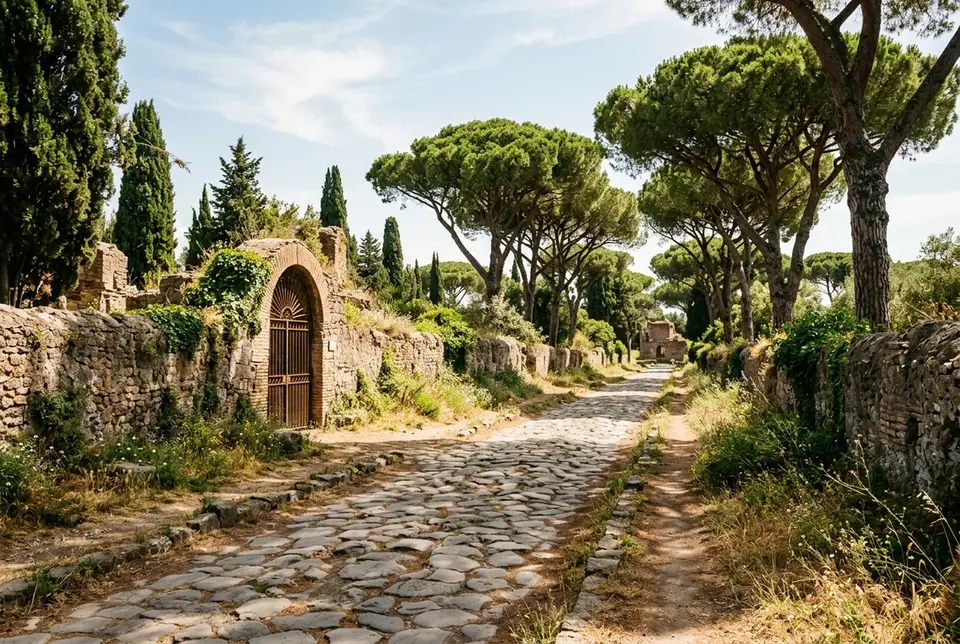
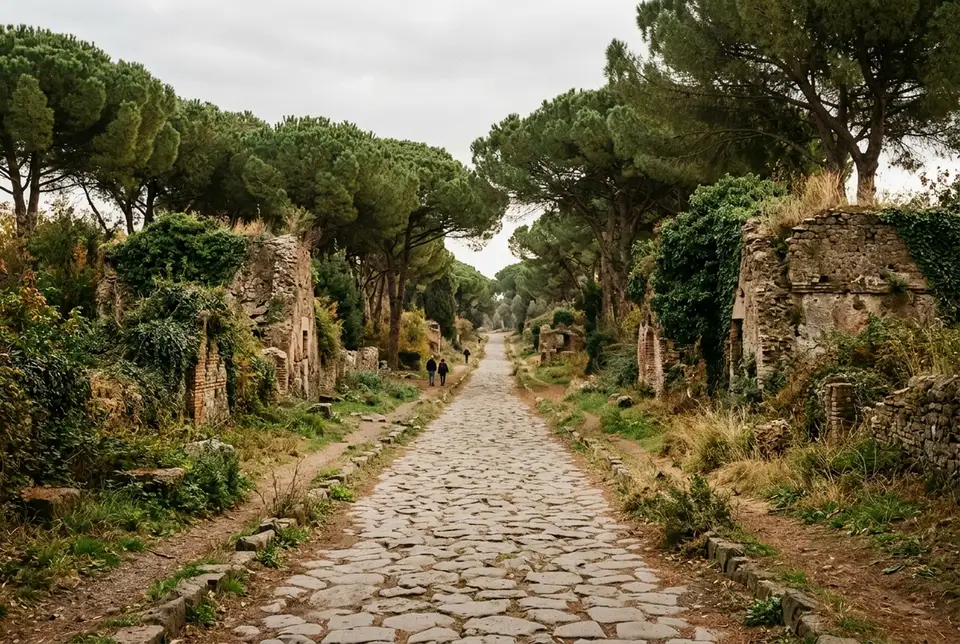
Past the Via Ardeatina junction, near the small church known as “Domine, quo vadis?”, the road changes character. From there begins a long, exceptionally well preserved straight stretch lined with hundreds of ancient monuments, including original basalt paving you can still walk on today.
Where the Appian Way begins
Open in Google MapsHow long is the Appian Way?
That depends on which “Appian Way” you mean, and most pages blur the three answers together. The full ancient road ran 335.5 miles, about 540 km, from Rome toward the southeast, but almost nobody visiting the catacombs is asking about that whole route.
What matters for a visit is much shorter. The state protected stretch near Rome runs about 12 km, from house number 195 out to the hamlet of Frattocchie, and Wikipedia notes that about 16 km is realistically walkable on foot from the start near the Baths of Caracalla. The table below keeps those three numbers apart so you don’t plan a day trip around the wrong one.
| Length of the Appian Way | Distance | What it means for you |
|---|---|---|
| Full ancient road, Rome to Brindisi | 540 km | Historical fact, not a visitable route |
| State protected stretch near Rome | 12 km | The zone with monuments and original paving |
| Walkable from the Baths of Caracalla | 16 km | What a determined visitor could cover on foot |
Three lengths, one road
Source:Parco Archeologico dell'Appia AnticaWhy are there so many catacombs along the Appian Way?
Roman law forced it. Roman law forbade burial places within the city limits, so every cemetery, including the catacombs, had to sit outside the walls, strung along the roads leading out of the city.
The Appian Way carried an unusual share of that traffic because it was one of Rome’s main southern roads, and catacombs were dug outside the walls along several consular roads, including the Via Appia, Via Ostiense, Via Labicana, Via Tiburtina and Via Nomentana. Catacomb use itself began in the 2nd century AD, driven by overcrowding, a shortage of burial land and the early Christian objection to cremation.
Can you walk the Appian Way?
Yes, though where you start changes the experience completely. Say you finish a morning catacombs tour and head straight onto the road expecting ancient paving right away: the first stretch near the Baths of Caracalla is still a real, trafficked road, not a quiet ruin.
Push past the Via Ardeatina junction instead, and the walk changes. That is where the park’s own protected zone begins, with original basalt paving and hundreds of ancient monuments lining the route, and traffic drops off sharply once you’re past the first five kilometers, per Wikipedia’s note that the road sees heavy traffic for about 5 km near Rome before it goes quiet.
Is the Appian Way worth seeing?
If you’re already booked for one of the catacombs out here, yes. You get original Roman stonework and a run of ancient tombs and monuments on the same short trip, rather than a separate outing to a different part of Rome.
I’d pair it with whichever catacomb sits closest to where you start walking, which the route overview on our Getting There guide lays out stop by stop. For the bigger picture of where all four public catacombs sit relative to the road and to each other, see our guide to where the catacombs of Rome are located.
Questions
What else is there to see on the Appian Way besides the catacombs?
Beyond the catacombs, the protected stretch holds original basalt road paving and hundreds of ancient tombs and monuments lining both sides. The Appian Way Regional Park manages the area as a single archaeological zone, so most of what you see is free to walk past.
Is the Appian Way far from central Rome?
No, it starts within a few kilometers of central Rome, near the Baths of Caracalla. The quieter, monument lined stretch begins only a little further out, past the Via Ardeatina junction.
Do you need a car to visit the Appian Way?
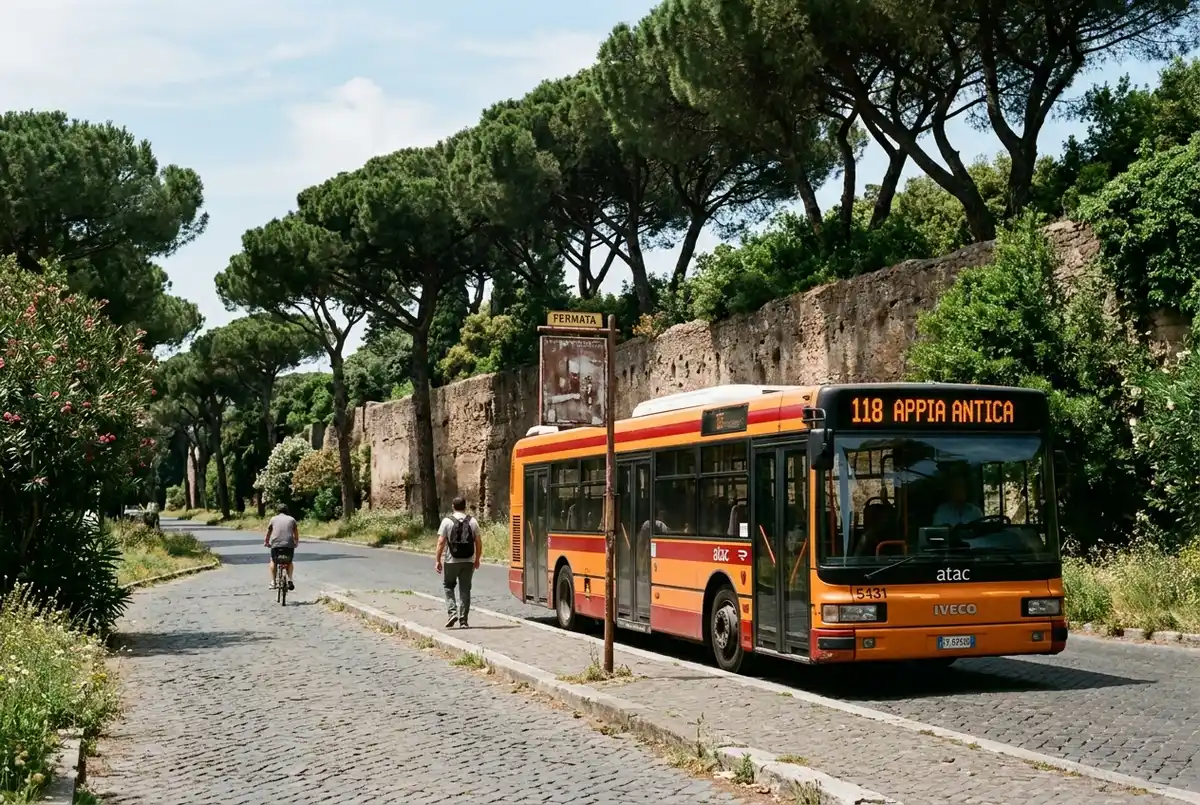
No, you can walk in from the Baths of Caracalla or take a bus along Via Appia Antica. A car only helps if you want to cover the full 12 km protected stretch in one visit.
Which catacombs sit directly on the Appian Way?
San Callisto and San Sebastiano both sit directly on or alongside the road itself. Domitilla and Priscilla sit nearby on connecting streets rather than on the Appian Way’s own route.