The Catacombs of San Sebastiano: Where St Sebastian Is Buried
Catacombs of San Sebastiano: the origin of the word catacomb, where St Sebastian's remains rest, and how close the site is to San Callisto.
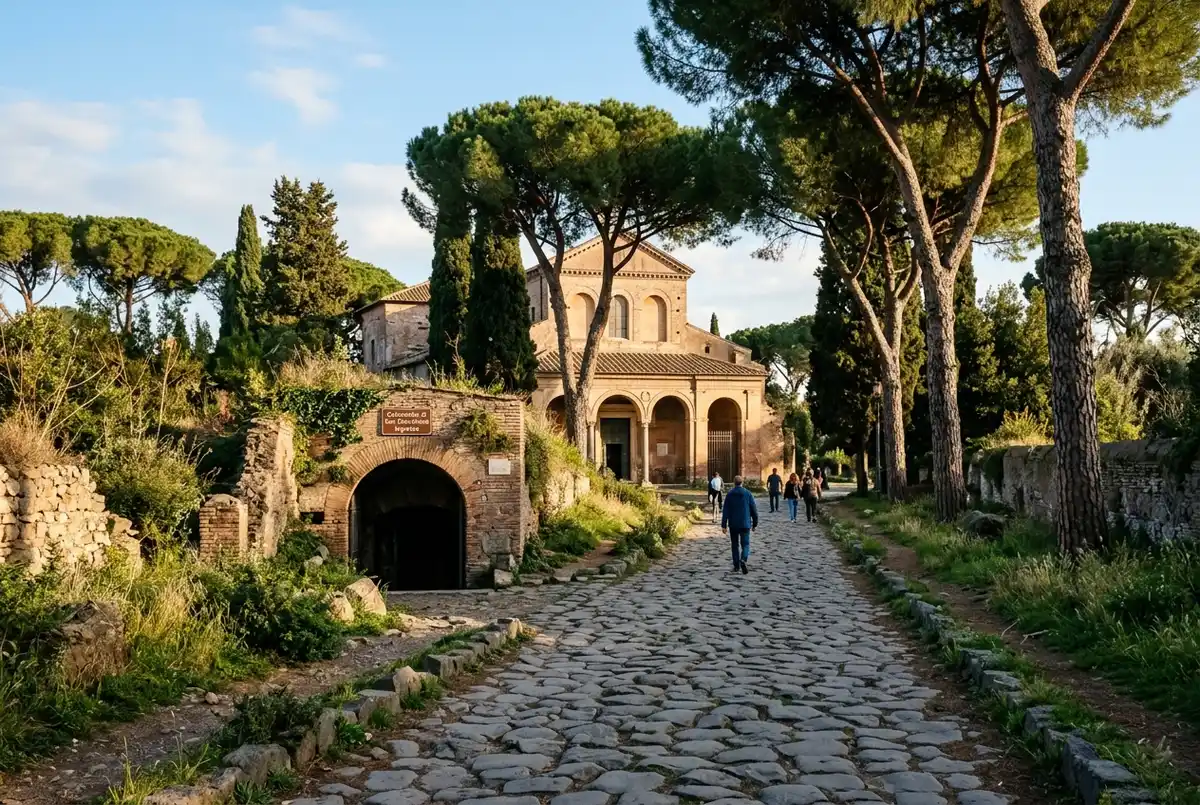
The Catacombs of San Sebastiano stand where the ancient name 'ad catacumbas' gave the world the word catacomb. Saint Sebastian's remains have rested here, on and off, since the 3rd century.
 Catacombs of San Callisto Entry Ticket and Guided Tour From $15.35 · Cheapest real catacombs ticket See dates
On this page 7 sections
The Catacombs of San Sebastiano sit on the Via Appia Antica, on ground once called “ad catacumbas,” the ancient name that gave the entire world its word for an underground burial site. Saint Sebastian himself has been venerated here since the 3rd century, though the site’s dedication to him didn’t become its prevailing identity until centuries later.
The Catacombs of San Sebastiano, by the numbers
Source:Catacombs of San Sebastiano, official siteWhy are the Catacombs of San Sebastiano called that?
The site was a pagan burial ground before Christians began using it at the end of the 2nd century. It only took Saint Sebastian’s name after the 13th century, when his cult there became prevalent, even though the martyr had been buried and venerated at the site for centuries before that.
“this area of the Appian Way was known as ad catacumbas”
Catacombs of San Sebastiano, official site, 2026 · source
What is ad catacumbas, and why does it matter?
Ad catacumbas was the ancient name for the low ground near Porta San Sebastiano, probably from the shape of the land and old quarries there. Through a process of extension described on Wikipedia, that name is the direct root of the word “catacomb” used worldwide for underground burial sites today.
If you’ve ever wondered why every underground cemetery, anywhere in the world, shares a Latin sounding name, this stretch of the Appian Way is the answer.
Where are Saint Sebastian’s remains?
Sebastian was buried and venerated in the underground cemetery for centuries. His relics left the catacomb in the 9th century, then returned to the Appian Way, where they now rest in a 17th century crypt inside the basilica built above the site.
How is San Sebastiano connected to the Apostles Peter and Paul?
The site was once called Memoria Apostolorum because the relics of Peter and Paul were venerated there together, traditionally dated to 258 AD by the 5th century Martyrologium Hieronymianum, one of the earliest surviving Christian calendars.
What can you see in the mausoleums at San Sebastiano?
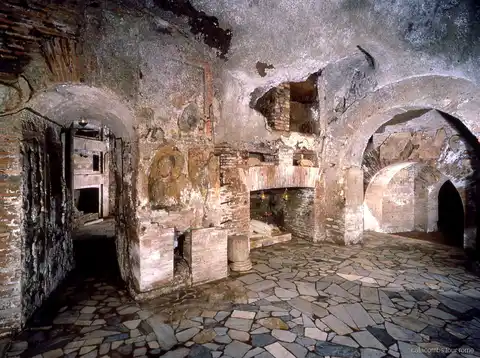
Three 2nd century pagan mausoleums sit beneath the basilica, decorated with original frescoes and stuccoes. Christian symbols like the anchor and fish, later added to one of them, the Mausoleum of Innocentiores, show the site shifting from pagan to Christian burial.
| Mausoleum | Original use | Notable feature |
|---|---|---|
| Marcus Clodius Hermes | Pagan family tomb | Exterior paintings and owner’s inscription |
| Innocentiores | Pagan, later Christian | Anchor and fish symbols added later |
| The Adze | Pagan family tomb | Named for a carved tool motif |
Where are the Catacombs of San Sebastiano, and how close are they to San Callisto?
The entrance sits at Via Appia Antica 136, a short distance along the same road from the Catacombs of San Callisto at Via Appia Antica 110, the two best known catacombs on the Appian Way.
Picture a reader standing outside San Callisto on the Appian Way after their tour, checking how far it actually is to San Sebastiano’s entrance. The two addresses sit close enough together that walking over and seeing both sites in the same visit is a realistic plan, not an ambitious one.
For how San Sebastiano compares to San Callisto, Domitilla and Priscilla, read which catacombs in Rome should you visit. For the standalone history of the Catacombs of San Callisto, see that page.
Where San Sebastiano sits, relative to San Callisto
Open in Google MapsQuestions
What does ad catacumbas mean?
It refers to the hollow or low ground near ancient quarries on the Appian Way. The term later extended to describe any underground burial site worldwide.
Is the Catacombs of San Sebastiano the same as the Basque city of San Sebastian in Spain?
No. The two share only a name. The Rome catacombs are an ancient Christian burial site on the Appian Way, unrelated to the Spanish coastal city.
When did Saint Sebastian’s relics return to the Appian Way?
His relics left the catacomb in the 9th century and were later returned, now resting in a 17th century crypt inside the basilica built above the original site.
What makes San Sebastiano different from the Catacombs of San Callisto?
San Sebastiano is the namesake site for the word “catacomb” itself, while San Callisto is better known for its Crypt of the Popes. Both sit on the Via Appia Antica, a short distance apart.