The Capuchin Crypt: Rome's Bone Chapel (and Why It Isn't a Catacomb)
Capuchin ossuary Rome: location, 10 EUR ticket price, over 3,700 bones, and why it isn't actually a catacomb.
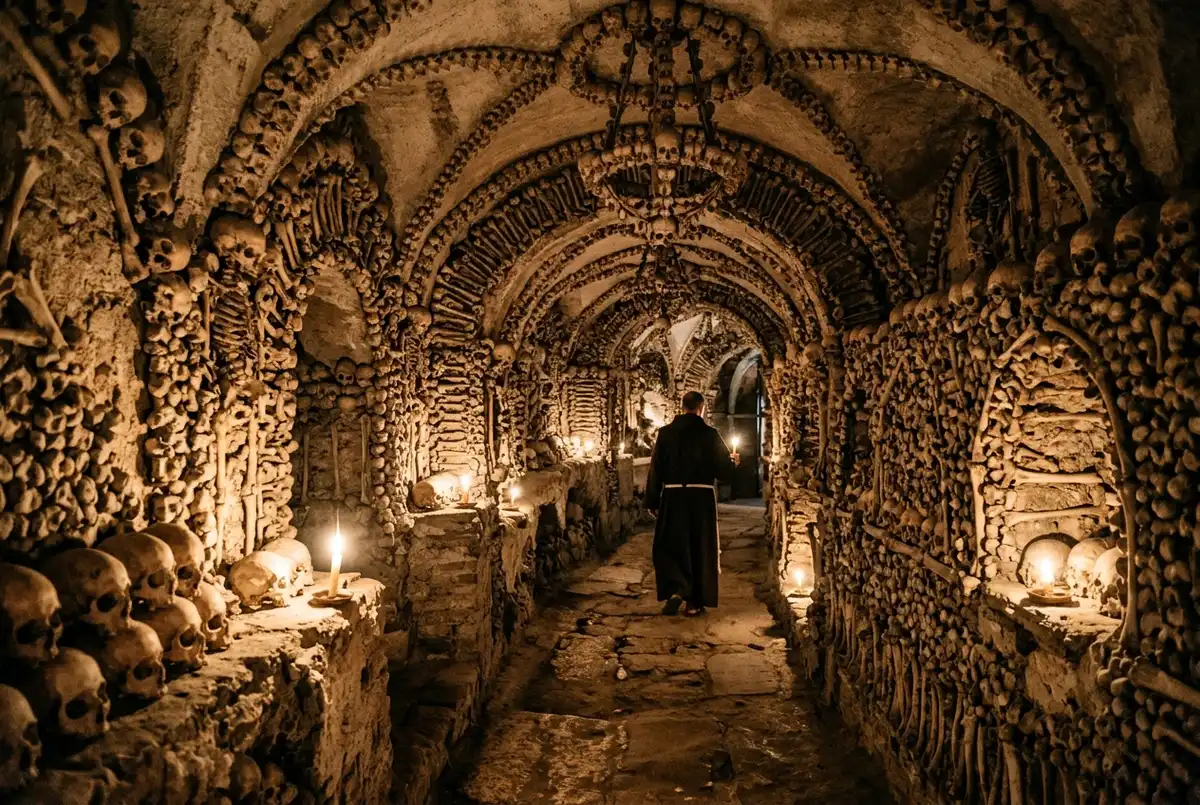
The Capuchin ossuary in Rome sits beneath Via Vittorio Veneto 27, decorated with the bones of over 3,700 people, mostly Capuchin friars. It is a 1620s convent crypt, not an ancient catacomb, and a full adult ticket costs 10 EUR.
 Catacombs of San Callisto Entry Ticket and Guided Tour From $15.35 · Cheapest real catacombs ticket See dates
On this page 7 sections
Capuchin ossuary in Rome is the crypt beneath the Church of Santa Maria della Concezione, and I’d stop calling it a catacomb once you know what’s actually down there. It’s a convent burial chamber from the 1620s, decorated with real human bones, not an ancient Christian tunnel network.
Where is the Capuchin Crypt?
The crypt sits at Via Vittorio Veneto 27, inside a convent the Capuchins began building in 1626. The museum’s own site gives the address as Via Vittorio Veneto 27, 00187 Roma, a short walk from Piazza Barberini.
That convent went up on the initiative of a pope with family ties to the order. The convent was built starting in 1626 on the initiative of Pope Urban VIII Barberini, whose brother, Cardinal Antonio Barberini, was a member of the order, and by 1631 it already housed a sizable fraternity.
The Capuchin Crypt, by the numbers
Source:Museum and Crypt of the Capuchin FriarsDo you need tickets for the Capuchin Crypt?
Yes. The full price adult ticket, with an audioguide included, costs 10.00 EUR, and there’s a 6.50 EUR reduced rate for ages 7 to 17, over 65, students and a few other categories.
Children up to and including age 6 get in free, as do visitors with disabilities and licensed national tour guides. Groups of 10 or more pay 7.50 EUR per person, and booking online adds a small 1.50 EUR fee per ticket.
How many bodies are in the Capuchin Crypt?
Over 3,700. The museum’s own history page states the crypt is known for decorations made with the bones of over 3,700 deceased, arranged along a corridor and a set of named rooms rather than left in a single mass grave.
The crypt page breaks that corridor down room by room: the remains of approximately 3,700 deceased, mostly Capuchin friars, were gathered in a corridor about thirty meters long, currently flanked by six rooms. The table below lists what each room actually holds.
| Room | What it displays |
|---|---|
| Crypt of the Three Skeletons | Full skeletal arrangements |
| Crypt of the Tibias and Femurs | Leg bones in geometric patterns |
| Crypt of the Pelvises | Pelvic bones used decoratively |
| Crypt of the Skulls | Skulls set into the walls |
| Mass chapel | A functioning chapel space |
| Crypt of the Resurrection | A bone decorated resurrection scene |
“ossa e teschi decorano pareti e volte”
Museum and Crypt of the Capuchin Friars · source
Are the bones in the Capuchin Crypt real?
Yes. The museum’s own crypt page describes the arrangements as made from the actual remains of thousands of deceased, mostly friars of the order, not replicas built for display.
That same page names individual burials among the remains, including the heart of Maria Felice Peretti, who died in 1656, and Giuseppe Matteo Orsini, who died in 1660. The crypt’s own description calls the result a memento mori, which the site translates loosely as “ossa e teschi decorano pareti e volte”, or bones and skulls decorate walls and vaults.
What is the story behind the Capuchin Catacombs?
There isn’t one confirmed story, despite the nickname. The crypt page itself says that lacking documentary certainty, the crypt’s origin has been filled in with legend, including competing stories about who first arranged the bones.
Say you book the crypt expecting an ancient Christian catacomb like the ones out on the Appian Way, then realize on arrival that it’s a much later ossuary inside a 1620s convent church. Reading the museum’s own history page first, rather than a travel blog’s retelling, would have reset that expectation before you bought the ticket. One cited tradition holds that the cemetery’s soil was brought from Palestine, but the museum presents it as legend, not settled fact.
Are Capuchin monks Catholic?
Yes. The order’s own site describes itself as an evangelical fraternity, with Jesus of Nazareth as its guide to a simple and humble life among the people, sitting within the wider Franciscan family.
That family traces back nearly five centuries. The order’s own navigation dates its founding bull, Religionis zelus, to 1528, making the Capuchins one of several Franciscan branches alongside the Conventual and Third Order Regular friars.
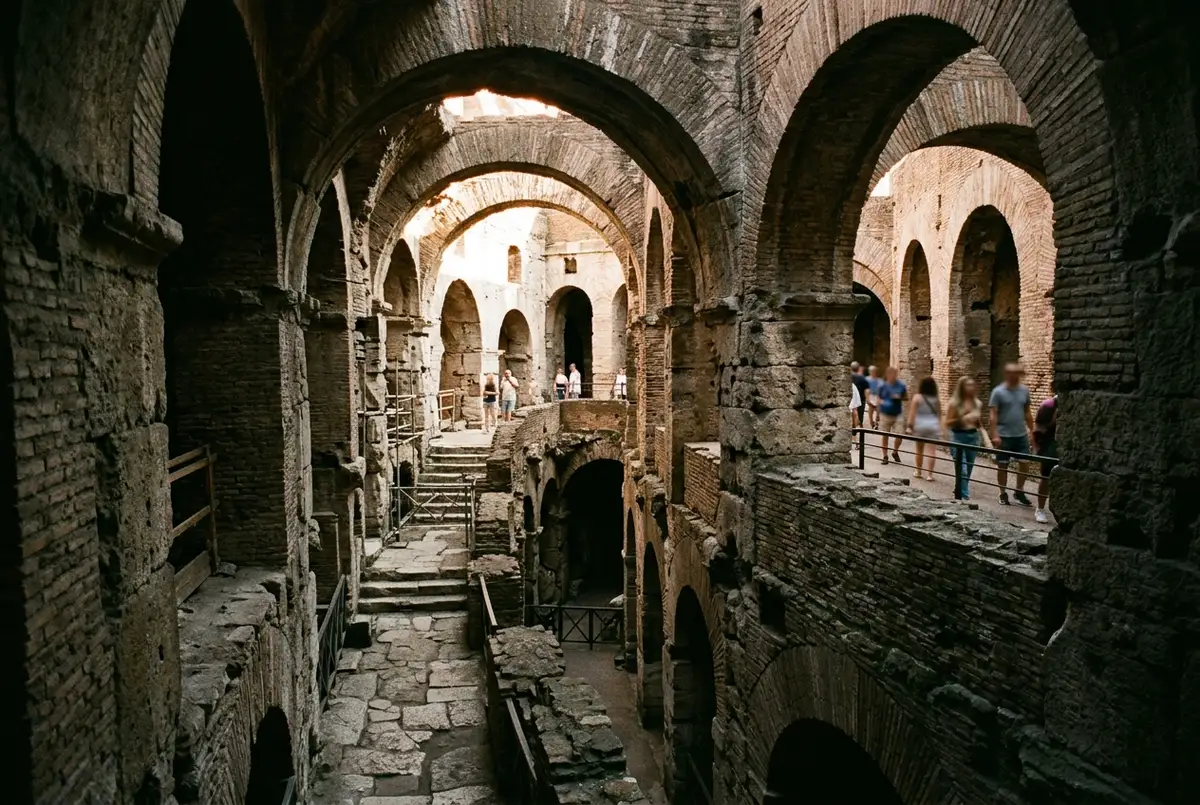
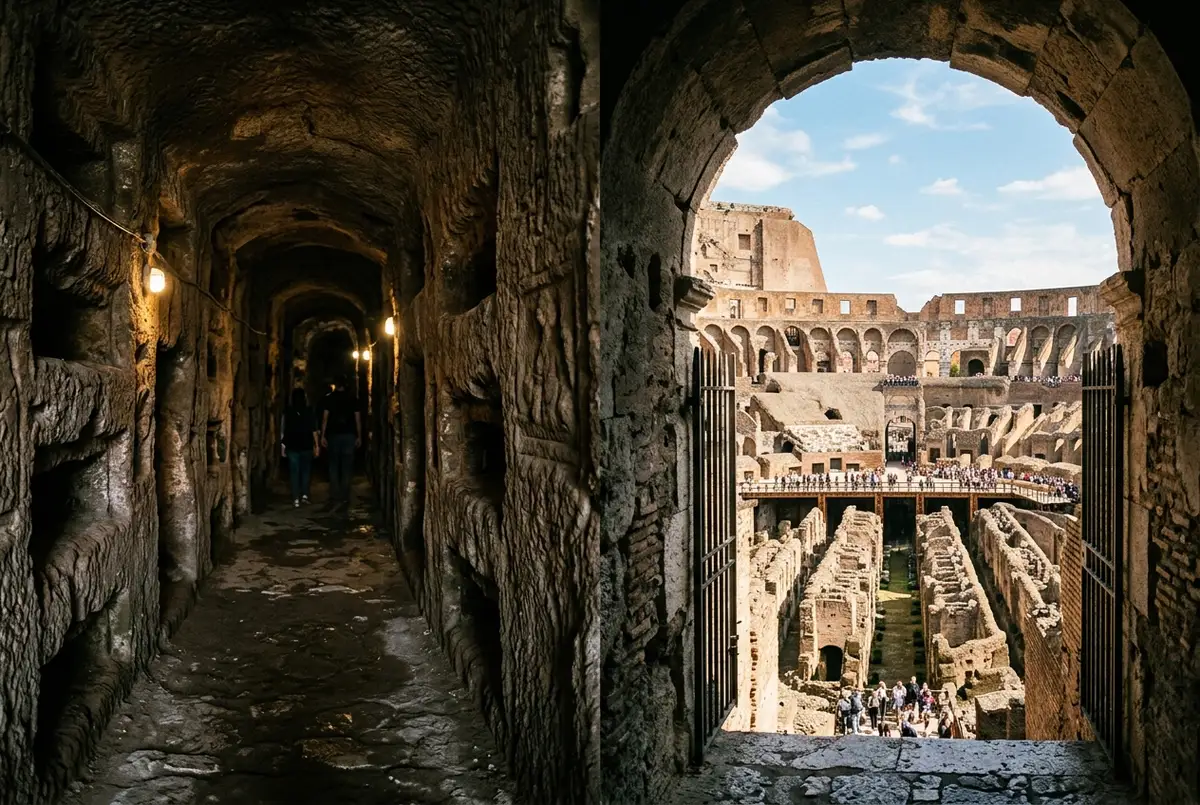
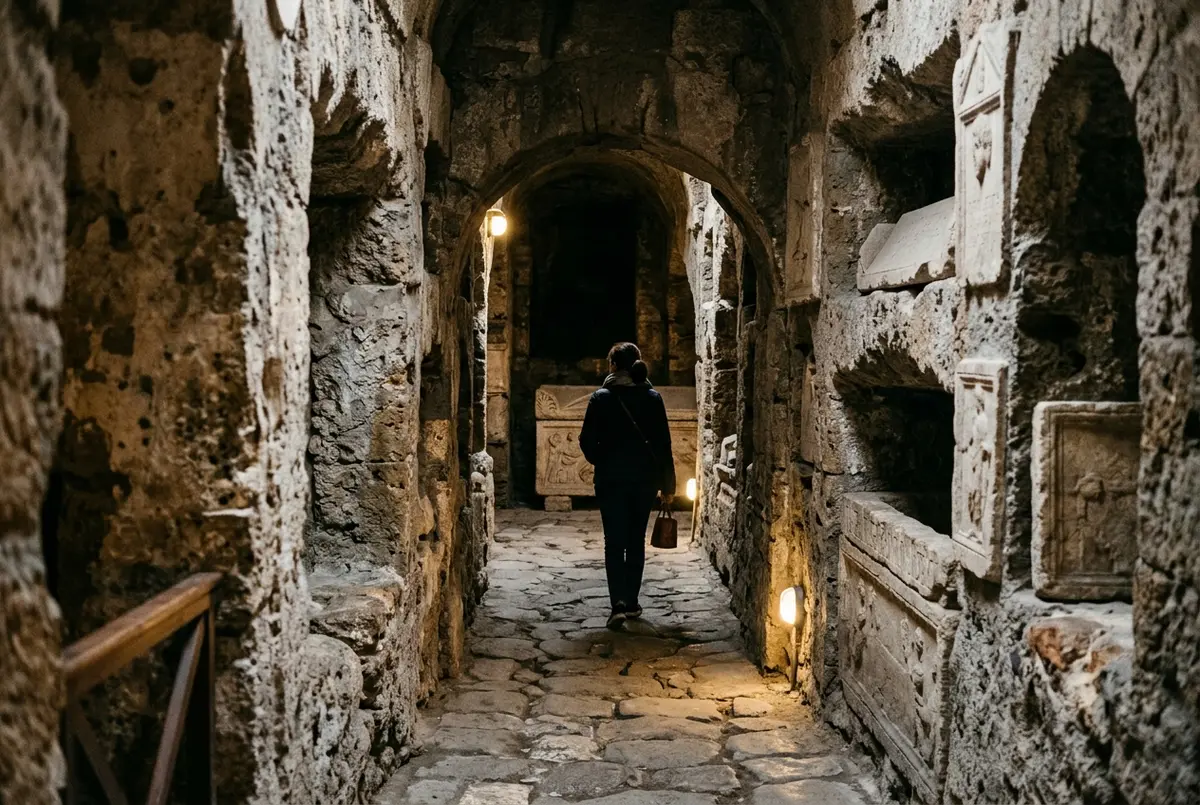
If you want the real catacombs nearby, our guide to underground Rome sorts the Capuchin Crypt from the Colosseum hypogeum and the Vatican Scavi, and our Colosseum underground page and Vatican catacombs page cover the other two sites people mix up with this one.
Questions
Is the Capuchin Crypt worth visiting?
Yes, if a close look at memento mori art and 17th century religious history interests you. It’s a short visit, usually under an hour, so it pairs easily with a walk through central Rome.
What is the dress code for entering the Capuchin Crypts?
Modest dress is required since it is a sacred site. The museum’s own site states that shoulders and legs must be covered to the knee to enter.
Can you take pictures in the Capuchin Crypt?
Most visitors report no photography inside the crypt itself, though the museum’s own pages don’t state this rule directly. Treat your phone as away until you’re back outside, since staff enforce it strictly.
Is there a Catholic church built with human bones?
Yes, this one. The Church of Santa Maria della Concezione sits above a crypt whose walls and vaults are decorated with the bones of over 3,700 people.