The History of the Catacombs of Rome: Who Built Them and Why
History of the catacombs of Rome: what a catacomb is, why they were dug, who's buried there, and the difference between a catacomb and a crypt.
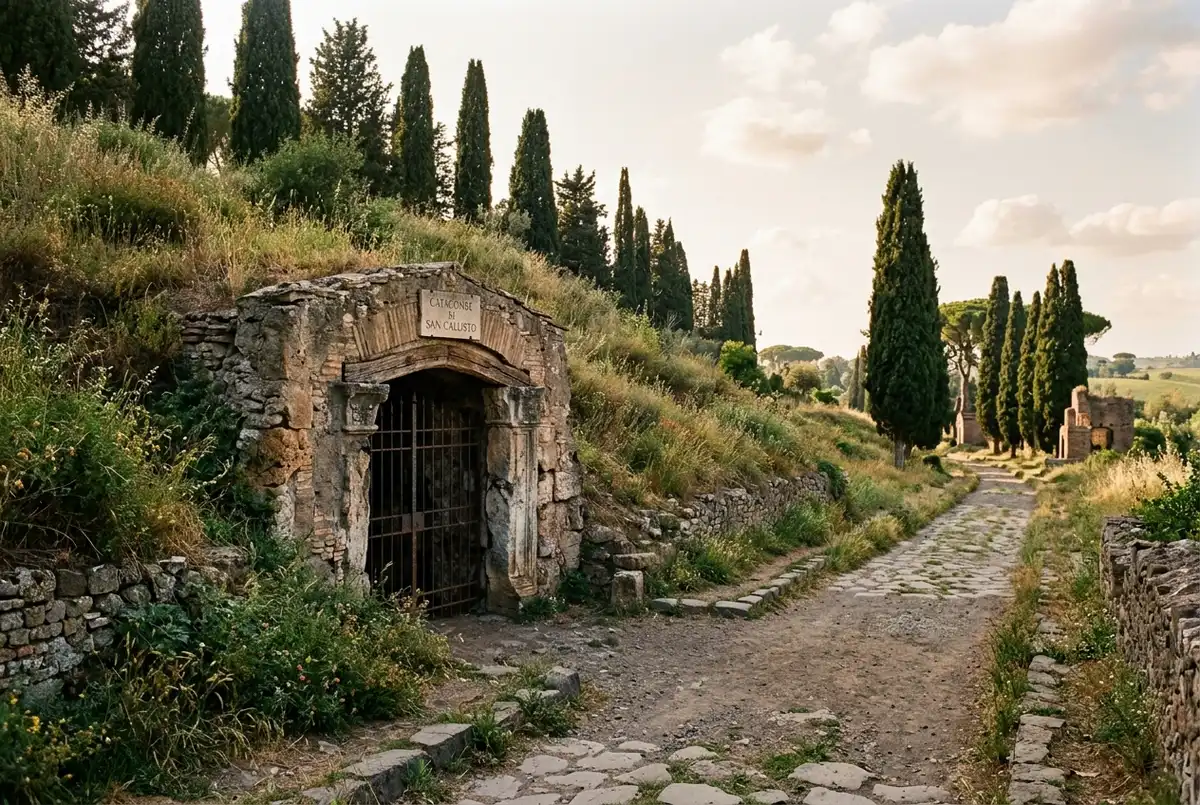
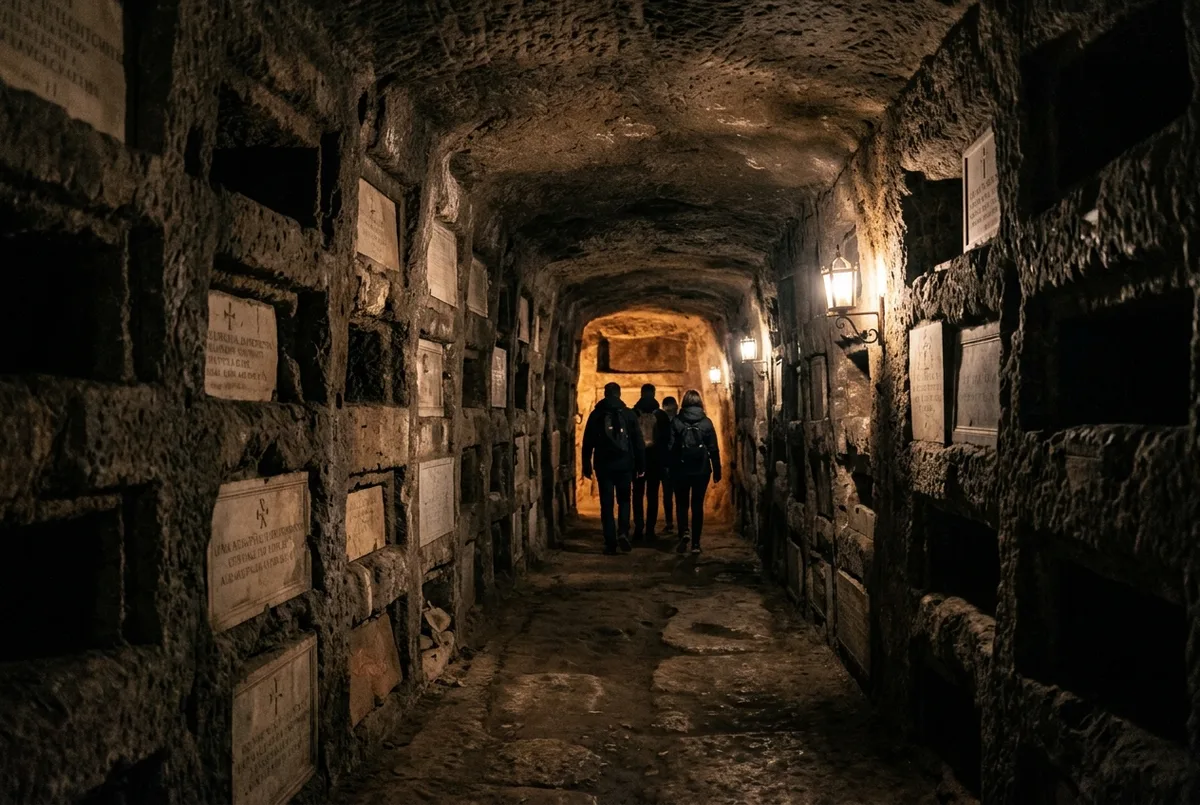
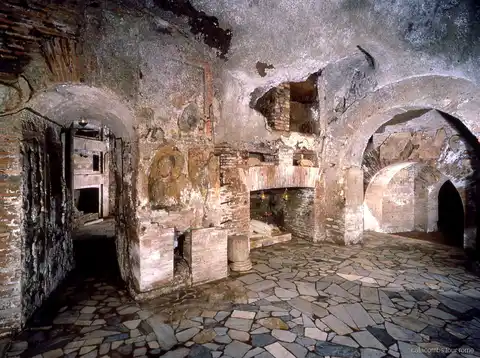
The catacombs of Rome are underground galleries cut into volcanic rock for burial, starting in the early second century AD when Christians began digging dedicated cemeteries on donated land, after Roman law pushed every burial outside the city walls.
 Catacombs of San Callisto Entry Ticket and Guided Tour From $15.35 · Cheapest real catacombs ticket See dates
On this page 7 sections
The history of the catacombs of Rome starts with a problem as old as the city itself: where do you bury your dead when the law says not inside the walls, and land outside them is expensive? The answer, dug over centuries, became one of the largest underground cemetery networks on earth.
The catacombs of Rome by the numbers
Source:The Holy See, Pontifical Commission for Sacred Archaeology, and Catacombs of San Callisto official siteWhat is a catacomb?
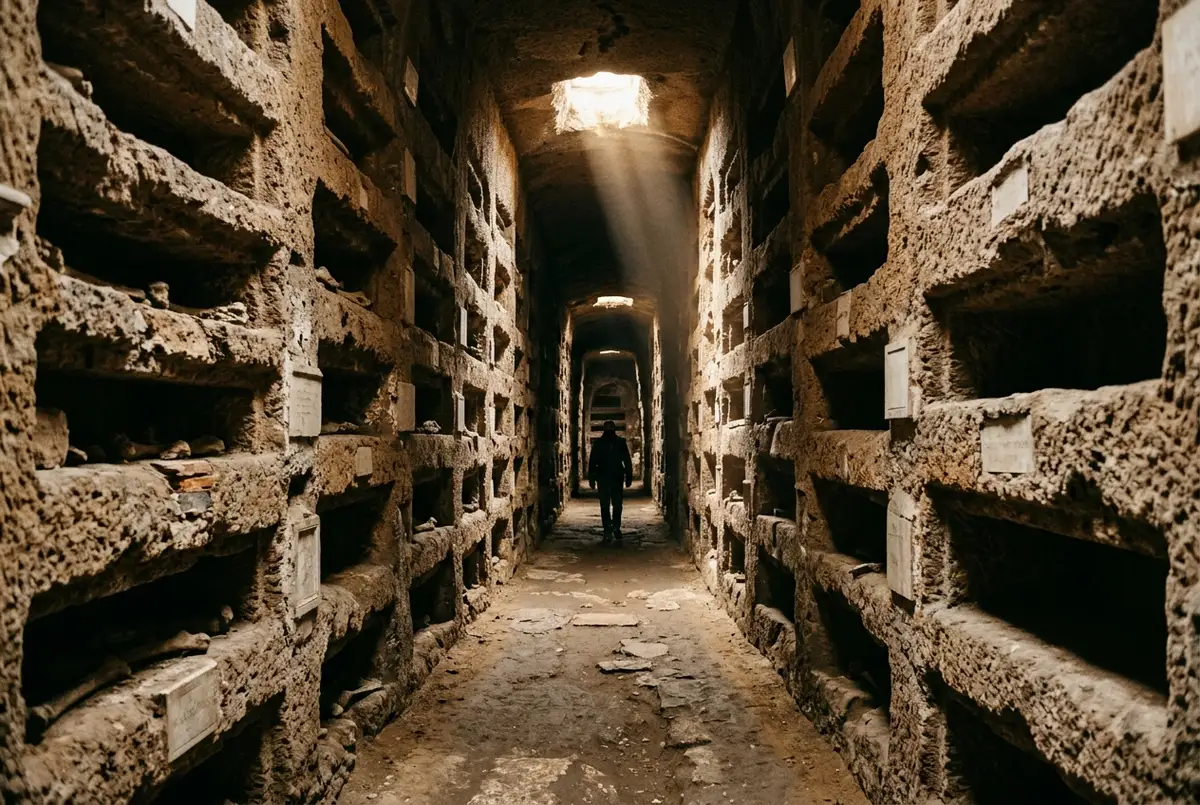
A catacomb is an underground network of galleries cut into soft volcanic rock, lined with burial niches stacked one above another. The name itself comes from ad catacumbas, a single place near the Via Appia, named for the pozzolana quarries there, later widened to cover every Christian underground cemetery in Rome.
So “catacomb” started as one address, not a type of building. It only became the generic word after the original site at ad catacumbas lent its name to the rest.
“the pre-eminent cemetery of the Roman Church”
The Holy See, Pontifical Commission for Sacred Archaeology, 2026 · source
Why do the catacombs exist?
Roman law kept burial at least two Roman miles outside the city walls, and land near Rome was scarce and costly. Digging down, rather than buying more ground, let a growing community keep expanding its cemetery for free.
That single legal constraint, no burial inside the walls, is really the whole reason Rome has catacombs at all rather than ordinary above ground cemeteries.
What is the difference between a crypt and a catacomb?
A catacomb is the whole underground cemetery; a crypt is one named chamber inside it. The Crypt of the Popes at San Callisto is a single room within the much larger San Callisto catacomb complex, not a separate site.
I’d keep that distinction in mind whenever a guide or a sign mentions a “crypt”: you’re standing inside one small part of a catacomb, not the whole network.
Was catacomb burial unique to Christians?
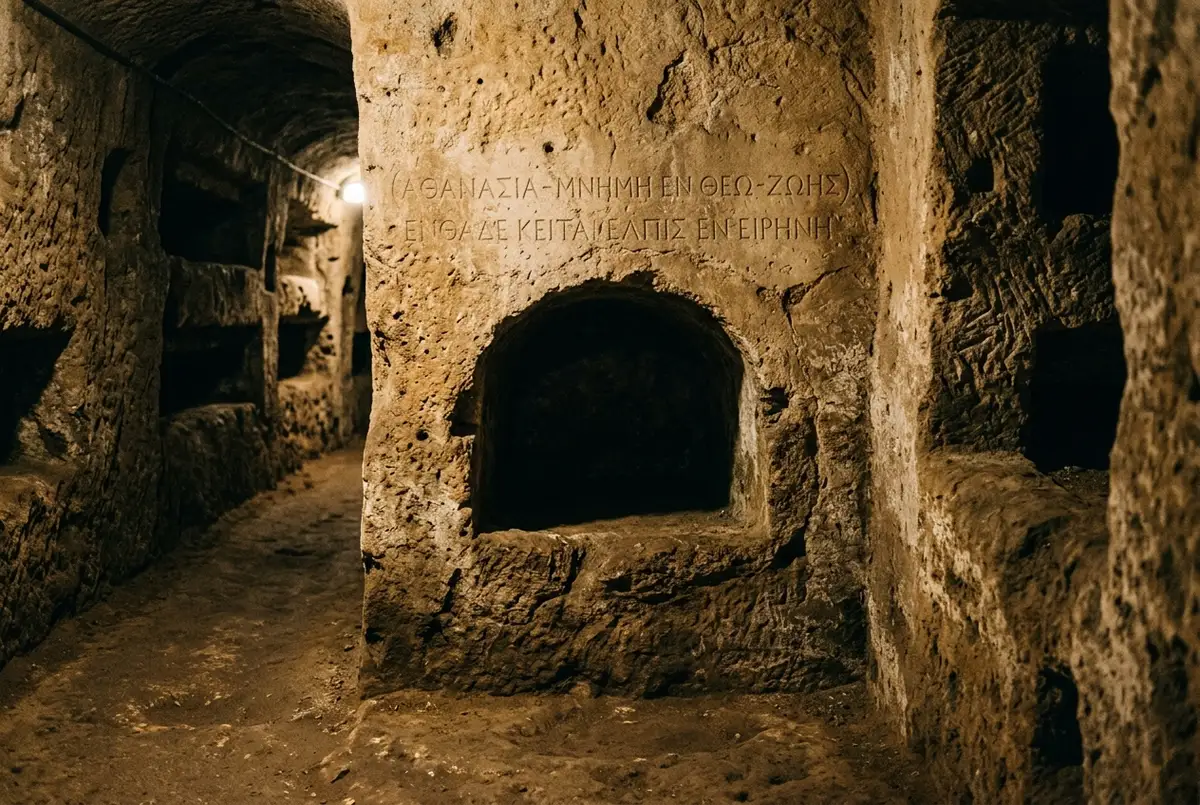
No. Rome’s Jewish community dug its own catacombs too, including Vigna Randanini on the Via Appia Antica, dated to the second through fourth centuries AD, with inscriptions in Greek and Latin rather than Hebrew.
That’s a useful corrective to the common assumption that every Roman catacomb is a Christian site. The method, digging down into volcanic rock, was shared across communities facing the same land shortage.
What did the early Christians do in the catacombs?
Mainly they buried their dead and honoured their martyrs, from the Crypt of the Popes at San Callisto to the tomb of Nereus and Achilleus at Domitilla, killed under Diocletian’s 304 AD persecution.
Nine popes rest in that one crypt alone, which is why it earned the nickname “the little Vatican.” Visiting their names carved into the wall is, for a lot of people, the single most memorable part of a catacomb tour.
Does Rome have catacombs today?
Yes. San Callisto and Domitilla both still sell daily tickets with a guided tour. Others, like the Jewish catacombs, have no standing public access at all.
Say you’ve got one afternoon in Rome and need to pick a single site. Weighing a site with a daily ticket and nine popes in one crypt against a site with no standing public access makes the choice easy: go where you can actually get in.
| Catacomb | Who’s buried there | Dating | Can you book a ticket? |
|---|---|---|---|
| San Callisto | 9 popes, St. Cecilia | End of 2nd century AD | Yes, daily |
| Domitilla | Martyrs Nereus and Achilleus | End of 2nd century AD | Yes, daily |
| Jewish catacombs | Rome’s Jewish community | 2nd to 4th centuries AD | Villa Torlonia: no. Vigna Randanini: special occasions only |
Questions
Where does the word catacomb come from?
It comes from ad catacumbas, a single location near the Via Appia named for nearby quarries. The word later widened to describe every underground Christian cemetery in Rome.
How many popes are buried in the Catacombs of San Callisto?
Nine, in the Crypt of the Popes, which earned the nickname “the little Vatican” for holding so many of the Church’s early leaders in one room.
Which is Rome’s oldest catacomb complex?
San Callisto and Domitilla both trace their oldest sections to the end of the second century AD, making them roughly contemporaries rather than one clearly predating the other.
How large did Rome’s catacombs become?
Some grew enormous: San Marcellino e Pietro alone is estimated to hold around 15,000 burials from the third century, spread across an 18,000 square meter site.