Who Is Buried in the Catacombs of Rome?
Who is buried in the catacombs of Rome: nine popes at San Callisto, named martyrs, and the single documented burial estimate that actually exists.
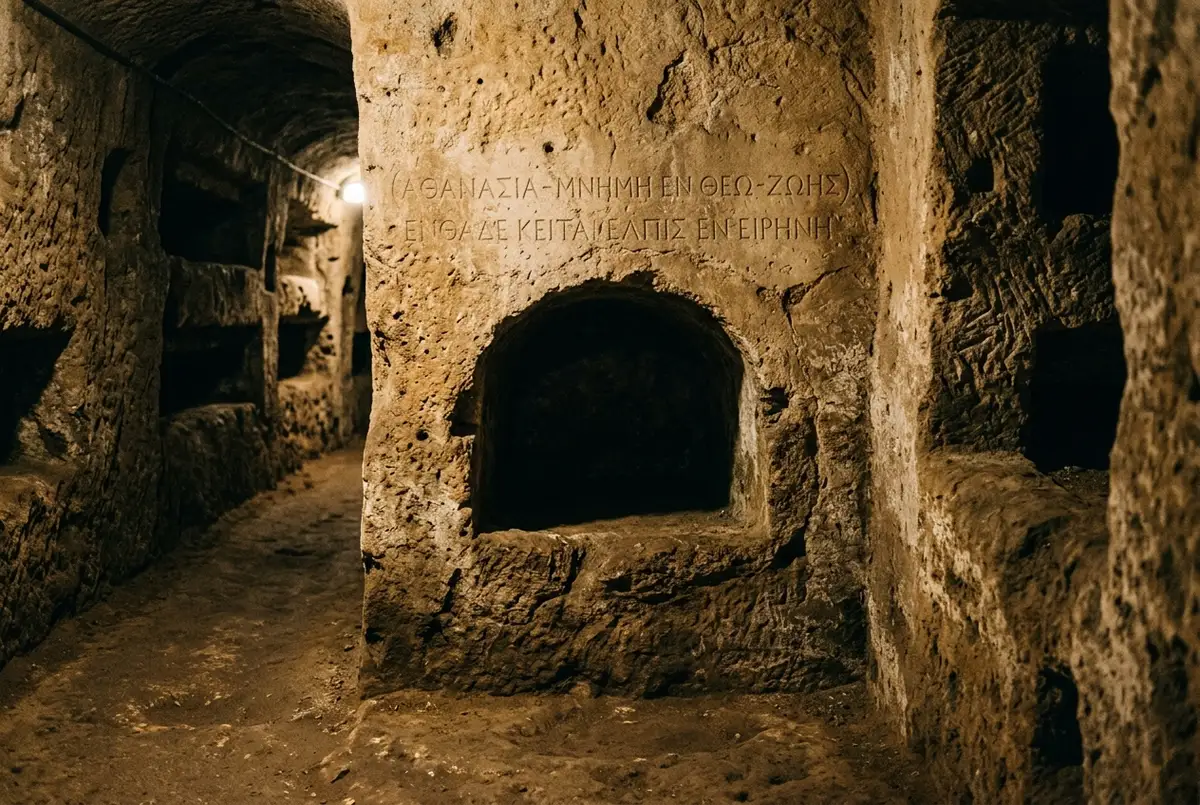
Mostly ordinary Romans, alongside named martyrs and popes. San Callisto's Crypt of the Popes alone holds nine popes, and Priscilla names seven more, including Sylvester and Liberius.
 Catacombs of San Callisto Entry Ticket and Guided Tour From $15.35 · Cheapest real catacombs ticket See dates
On this page 6 sections
Who is buried in the catacombs of Rome? Mostly people whose names never made it into any surviving record. But a handful of specific popes and martyrs did, and their names are exactly what turn a visit from a walk through tunnels into a walk through real history.
Who's buried, by the numbers
Source:Catacombs of San Callisto and the Holy See, official sourcesWho is buried in the catacombs of Rome?
Mostly ordinary Romans, alongside named martyrs and popes. San Callisto alone holds nine popes in its Crypt of the Popes, and the Catacombs of Priscilla name seven more, including Sylvester and Liberius.
That’s the honest answer to a question most pages oversimplify: it isn’t “martyrs and popes” as a vague category, it’s specific, named people whose tombs you can still walk past today.
How many popes are in the Crypt of the Popes at San Callisto?
Nine, which is why the room is nicknamed “the little Vatican”, plus probably eight more Church dignitaries from the third century buried alongside them.
Their original Greek inscriptions are still legible on the walls for five of them: Pontianus, Antherus, Fabian, Lucius and Eutichian. Seeing centuries-old Greek carved directly into the stone is, for most visitors, the most memorable moment of the whole tour.
“the official burial place of nine popes”
Catacombs of San Callisto, official site, 2026 · source
Which martyrs are buried in Rome’s catacombs?
Pope Sixtus II at San Callisto, a victim of Valerian’s persecution; Nereus and Achilleus at Domitilla, killed under Diocletian in 304 AD; and Felix and Philip with their mother Felicitas and five brothers at Priscilla.
Picture deciding between two catacombs based on who’s actually buried there: nine popes in one crypt at San Callisto, versus the martyrs Nereus and Achilleus and their own basilica at Domitilla, rather than picking blind.
| Catacomb | Named burials |
|---|---|
| San Callisto | 9 popes including Sixtus II, plus St. Cecilia |
| Domitilla | Martyrs Nereus and Achilleus |
| Priscilla | Martyrs Felix, Philip and Felicitas, plus 7 popes including Sylvester and Liberius |
Were non Christians buried in Rome’s catacombs too?
Yes. Rome’s Jewish community had its own catacombs, including Vigna Randanini, dated to the second through fourth centuries AD, with Greek and Latin inscriptions rather than Hebrew ones.
It’s an easy detail to miss if you only read about the famous Christian sites, but it changes the full answer to “who’s buried in Rome’s catacombs” from a single-faith story to a shared one.
How many bodies are estimated to be in Rome’s catacombs?
No official source gives a single Rome-wide total. The one documented estimate covers a single complex: about 15,000 people buried at the San Marcellino e Pietro catacombs during the third century alone.
I’d be skeptical of any page quoting a precise figure for the whole city: multiply that single-site estimate across every catacomb complex in Rome and you’d be guessing, not reporting a real number.
Questions
Where did all the bones in the catacombs come from?
Centuries of ordinary burials, one family and one generation at a time, built up the niches you see today. No single mass event created them.
Was Saint Cecilia buried in the Catacombs of San Callisto?
Yes, St. Cecilia is named among the burials at San Callisto, alongside the nine popes in the nearby Crypt of the Popes.
Who is buried in the Catacombs of Priscilla?
Seven popes, including Sylvester and Liberius, plus the martyrs Felix and Philip with their mother St. Felicitas and five brothers.
Why did Christians bury their dead in catacombs?
Scarce land and a legal ban on burial inside Rome’s walls pushed cemeteries underground, where a community could keep expanding its burial space without buying more surface ground.