Why Were the Catacombs of Rome Built?
Ancient Roman catacombs: why and when they were built, how they grew to 12 miles of galleries, and why they were eventually abandoned.
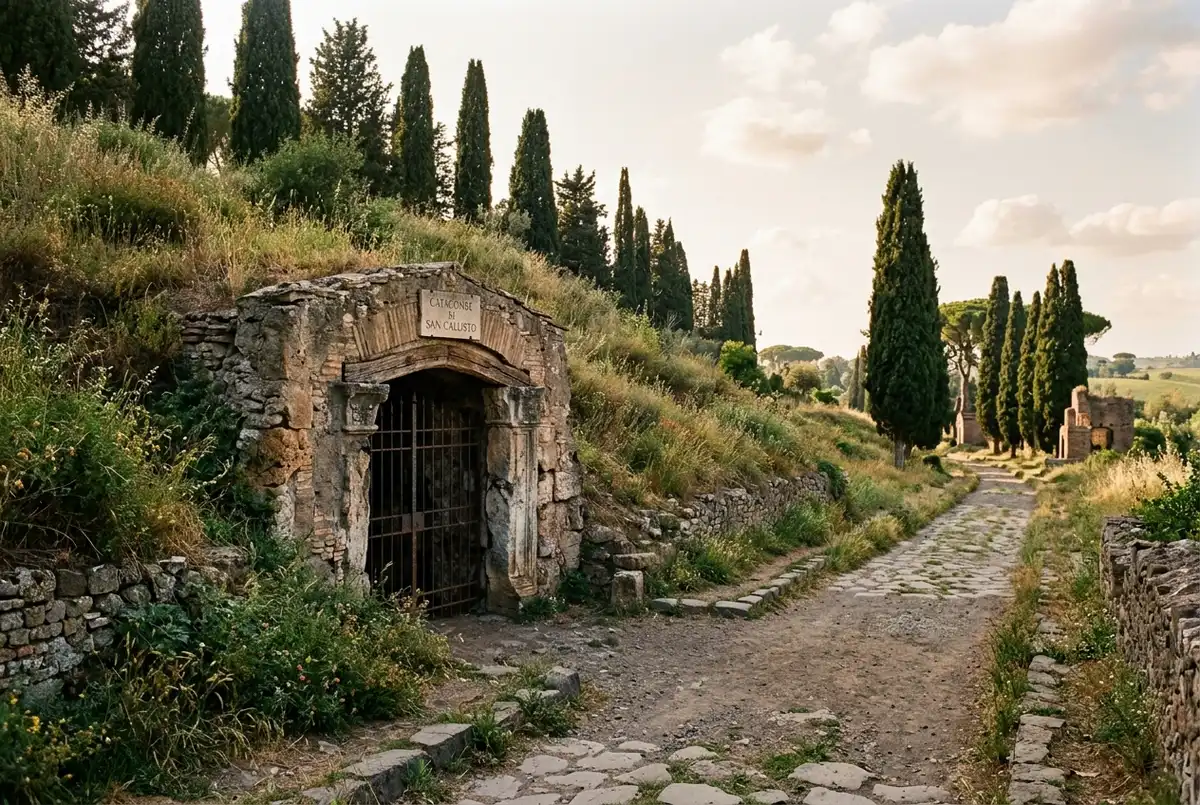
Rome's ancient catacombs were built because donated and purchased land let Christians dig dedicated underground cemeteries, starting in the early second century AD, after relying on family plots and shared common cemeteries before that.
 Catacombs of San Callisto Entry Ticket and Guided Tour From $15.35 · Cheapest real catacombs ticket See dates
On this page 7 sections
Rome’s ancient catacombs were built out of necessity, not design. Early Christians had no cemeteries of their own at first, and the underground network we visit today grew out of a very practical solution to a land shortage.
How the catacombs grew
Source:Catacombs of San Callisto, official siteWhy were the catacombs built?
Rome’s Christians first buried their dead in family plots or shared common cemeteries alongside pagans, until donated and purchased land in the early second century let them dig dedicated underground cemeteries of their own, according to the official site of the Catacombs of San Callisto.
That’s the key mechanism most guides skip: it wasn’t a law specifically commanding Christians underground, it was land gifts and purchases that made a dedicated Christian cemetery possible for the first time.
“the catacombs continued to function as regular cemeteries”
Catacombs of San Callisto, official site, 2026 · source
When were the catacombs built?
The first catacombs date to the first half of the second century AD, with St. Callixtus and the Flavian Hypogeum at Domitilla both tracing their oldest sections to around that same period.
Two separately founded sites reaching the same starting point is a strong sign that the early second century was when this practice took hold across Rome’s Christian community, not just at one location.
How old are the catacombs in Rome?
Close to 1,900 years old at their oldest. The Flavian Hypogeum at Domitilla and the earliest galleries at St. Callixtus both date to the end of the second century AD.
I’d treat any single “founding date” with some caution: different complexes started at slightly different points across the second century, and sources vary on the exact decade.
Why did early Christians build catacombs?
Early converts opened their family burial plots to fellow Christians rather than keeping them private, and as these shared grounds grew through further gifts and purchases, the Church itself began organizing and administering them directly.
What started as individual generosity turned into an institution. By the early third century, the Church had taken over running the largest of these cemeteries as official Church property.
How did the catacombs expand over the centuries?
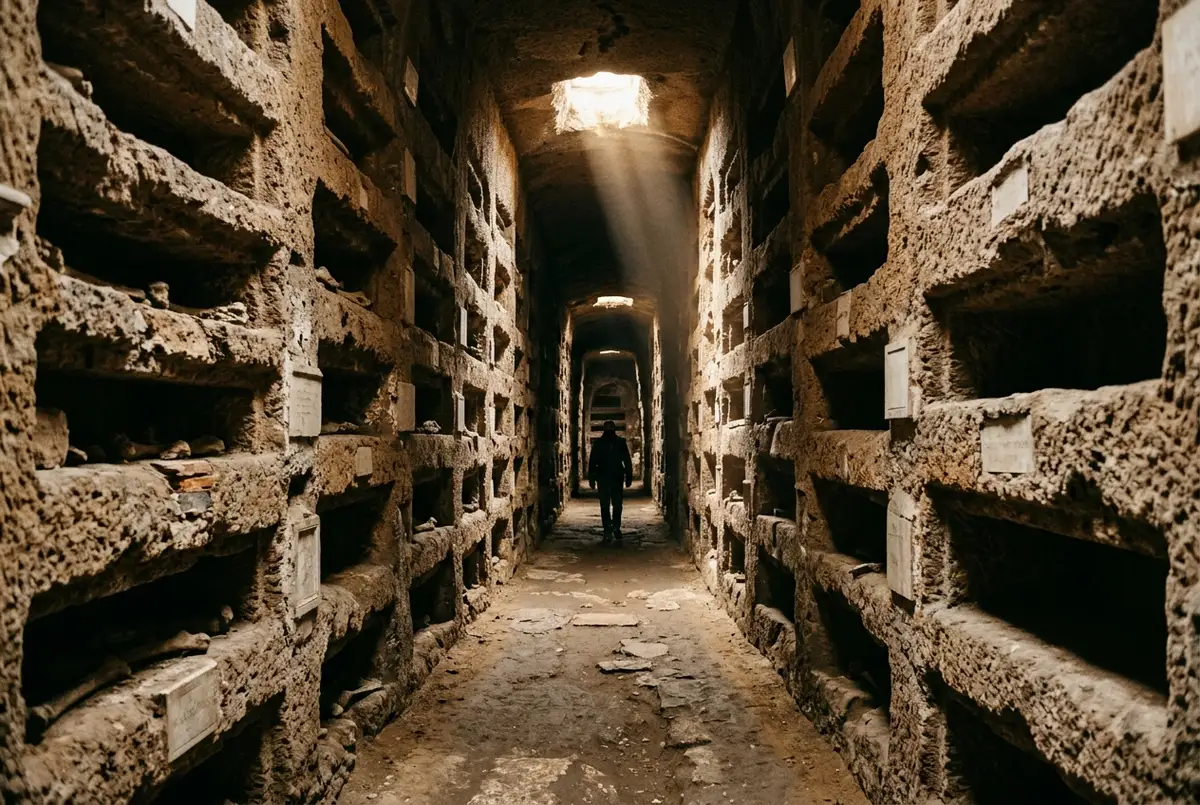
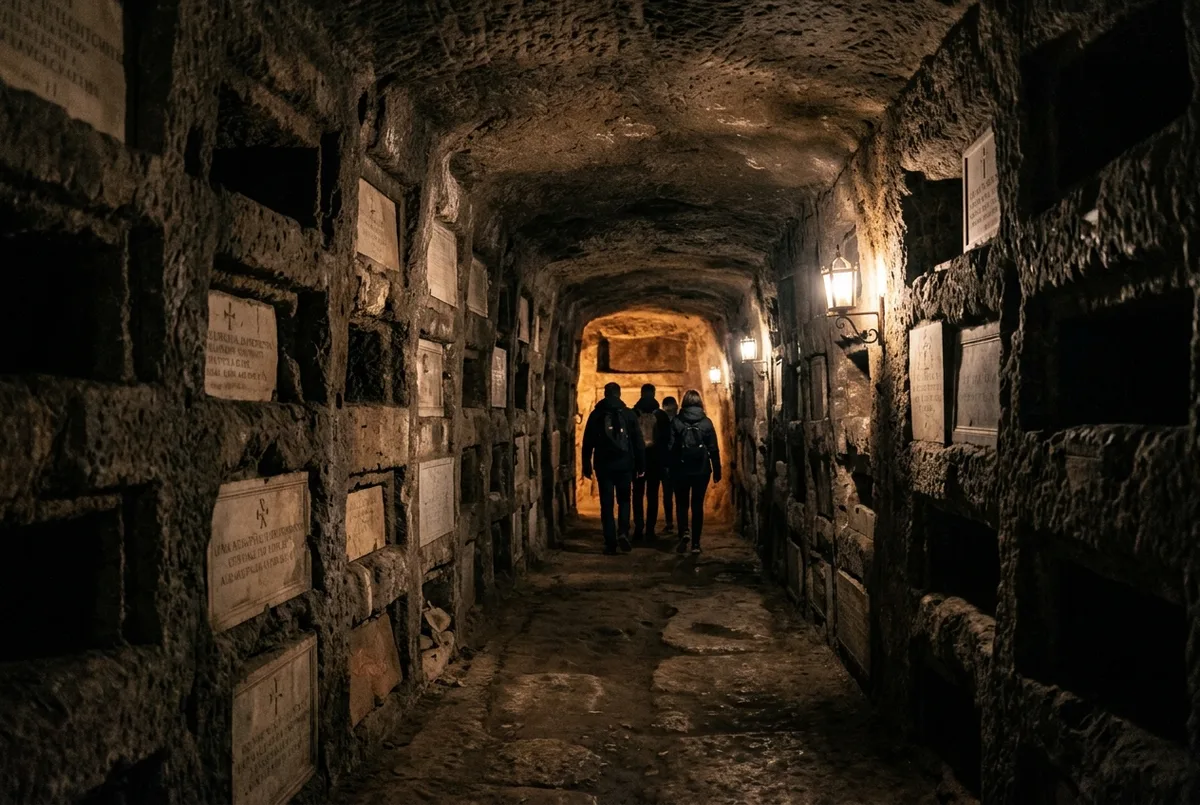
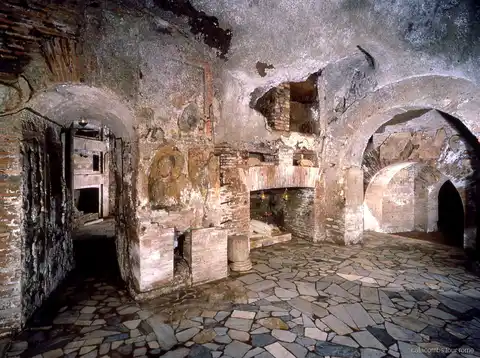
What began as single family tombs grew through further donations and land purchases into vast community networks. St. Callixtus alone eventually reached 90 acres and 12 miles of galleries across four underground levels.
After the Edict of Milan in 313 AD, Christians could buy cemetery land openly without fear of confiscation, and the catacombs kept functioning as regular cemeteries until the early fifth century.
The Catacombs of St. Callixtus themselves started as separate above ground cemetery areas with their own annexed hypogea dating to the end of the second century AD, only later connected into one vast network of community catacombs, according to the Vatican’s Pontifical Commission for Sacred Archaeology.
| Site | Founding period | Peak extent |
|---|---|---|
| San Callisto | Mid-2nd century AD | 90 acres, 12 miles of galleries, 4 levels |
| Domitilla | End of 2nd century AD | 4 underground levels |
| Priscilla | 2nd century AD onward | Burials continuing through the 6th century |
At Priscilla, popes were buried there across more than two centuries, from Marcellinus (296-304) through Sylvester (314-335) to Vigilius (537-555), and the same commission credits the site’s niche of Our Lady with the Baby and the prophet Balaam, dated 230-240, as the most ancient image of the Mother of God in the West.
Why did the catacombs fall out of use?
Gothic and Lombard raids damaged the sites, and by the late eighth and early ninth centuries popes moved martyrs’ relics into city churches for safety. After that, most catacombs were abandoned and their entrances lost to landslides and overgrowth.
Picture a family in ninth century Rome watching Church officials carry a saint’s relics out of a catacomb toward a city church. After seven centuries of continuous use, the move was pure security logic: raiders were sacking monuments across the city, and the safest place for a martyr’s remains was no longer underground. The sites stayed lost until Antonio Bosio rediscovered them centuries later, with further excavation by Giovanni Battista de Rossi in the 1800s.
Questions
Did early Christians meet in catacombs?
The sources behind this page cover burial use only, so no verified claim about regular meetings or worship gatherings is made here.
Why did Christians bury their dead in catacombs?
Because land near Rome was scarce and burial inside the city walls wasn’t allowed, so digging down let a growing Christian community keep expanding its cemetery without buying more surface land.
What were the catacombs used for?
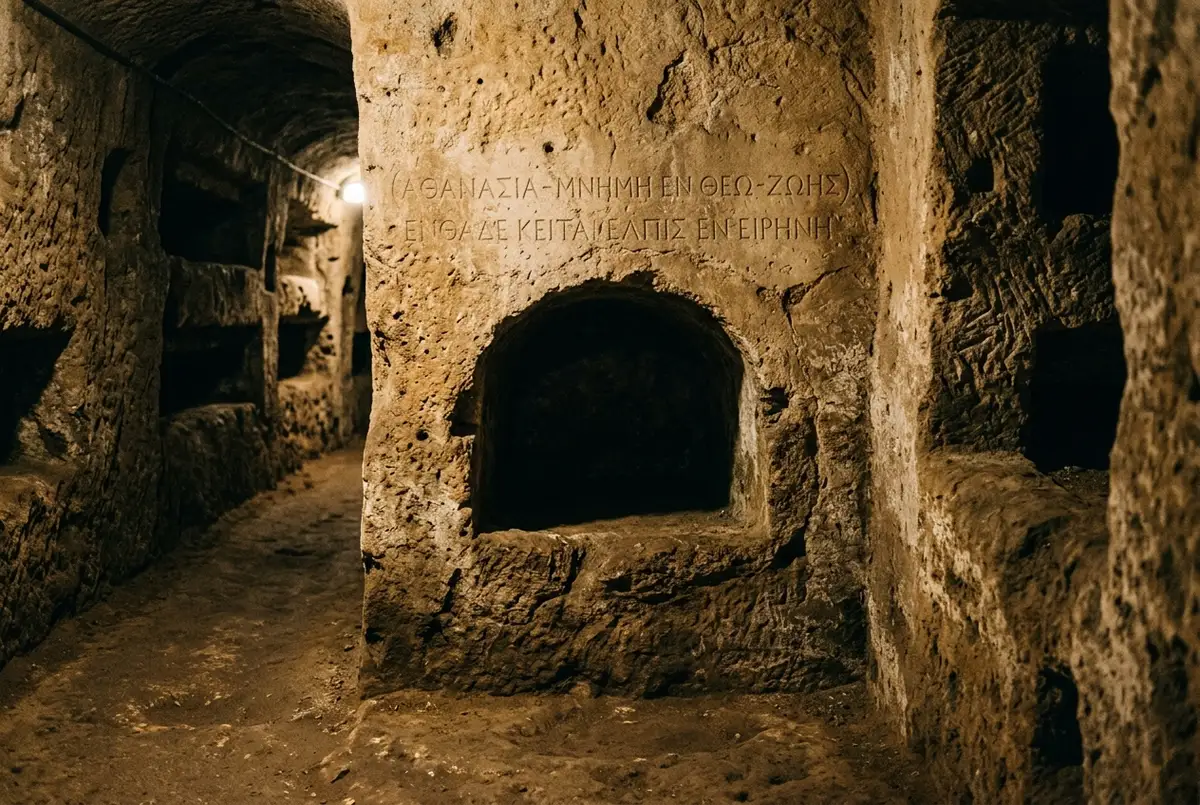
Primarily burial: rows of niches cut into volcanic rock held the bodies of ordinary believers, along with martyrs and, at several sites, early popes.
Who is buried in the catacombs in Rome?
Mostly ordinary Romans, plus named martyrs and popes at specific sites: nine popes alone rest in the Crypt of the Popes at San Callisto.