The Jewish Catacombs of Rome
Jewish catacombs rome: Villa Torlonia and Vigna Randanini explained, who can visit, how old they are, and how they differ from the Christian sites.
Rome's Jewish catacombs sit at Villa Torlonia and Vigna Randanini, proving catacomb burial here was never exclusively Christian. Villa Torlonia can't currently be visited, and Vigna Randanini opens only on special occasions.
 Catacombs of San Callisto Entry Ticket and Guided Tour From $15.35 · Cheapest real catacombs ticket See dates
On this page 7 sections
Rome’s Jewish catacombs are the city’s quiet proof that underground burial here was never a Christian exclusive. Two documented sites survive, at Villa Torlonia and Vigna Randanini, and neither works as a casual drop-in visit the way San Callisto or Domitilla do.
The Jewish catacombs by the numbers
Source:Turismo Roma and the International Catacomb SocietyIs there a Jewish area in Rome?
Rome has a historic Jewish quarter in the city centre, but its Jewish catacombs sit well outside it, at Villa Torlonia on the Via Nomentana and Vigna Randanini on the Via Appia Antica. The two are unrelated to the daytime Jewish Ghetto neighbourhood most visitors see.
Where are the Jewish catacombs of Rome?
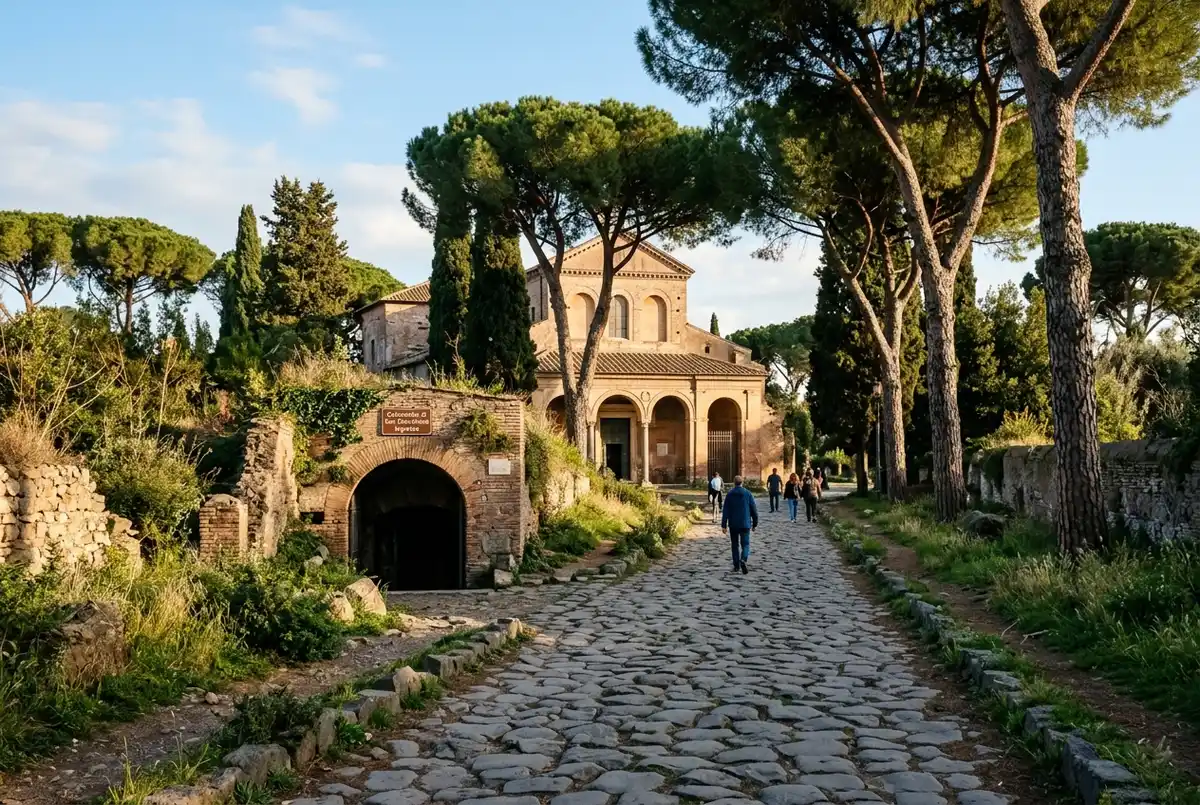
The two documented sites are Villa Torlonia, under a public park on the Via Nomentana, and Vigna Randanini, between the second and third mile markers of the Via Appia Antica, close to San Callisto and San Sebastiano.
That proximity to the main Christian sites surprises a lot of first-time visitors, since the two religious communities dug their cemeteries into the same stretch of volcanic rock outside the ancient city.
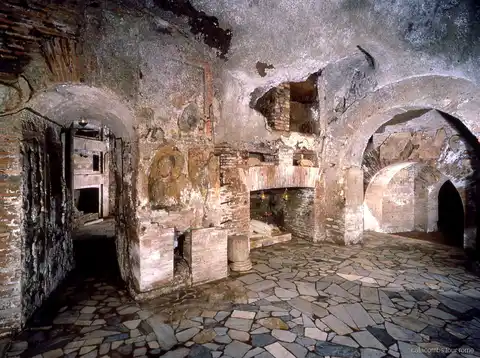
“an example of a jewish underground cemetery in excellent condition”
Turismo Roma, 2026 · source
Where the Jewish catacombs sit
Open in Google MapsCan you visit the Jewish catacombs in Rome?
Not easily. Villa Torlonia’s catacombs cannot currently be visited at all, according to Turismo Roma, and Vigna Randanini opens only on special occasions rather than on a daily ticket.
Picture a reader who has just toured San Callisto and assumes the Jewish catacombs nearby work the same way, walking up to the Vigna Randanini gate expecting a ticket window. There isn’t one most days. I’d check for a scheduled open day before building a Jewish catacombs stop into any Rome itinerary, rather than treating it as a guaranteed add-on.
| Site | Location | Access |
|---|---|---|
| Villa Torlonia | Via Nomentana, 70 | Cannot currently be visited |
| Vigna Randanini | Via Appia Antica, 119 | Open on special occasions only |
How old are the Jewish catacombs of Rome?
Vigna Randanini dates from the second to the fourth centuries AD, and scholarly chronologies put the Villa Torlonia catacombs in a similar broad second or third century AD range, according to the International Catacomb Society.
That puts both sites on roughly the same timeline as the earliest Christian catacombs being dug nearby.
Which religion buried their dead in catacombs?
Christians are the best known catacomb builders in Rome, but the Vigna Randanini and Villa Torlonia sites show Jewish communities dug their own, separate catacombs for the same reasons: scarce land, growing communities and a shared tradition of underground burial.
What makes the Jewish catacombs different from Rome’s Christian catacombs?
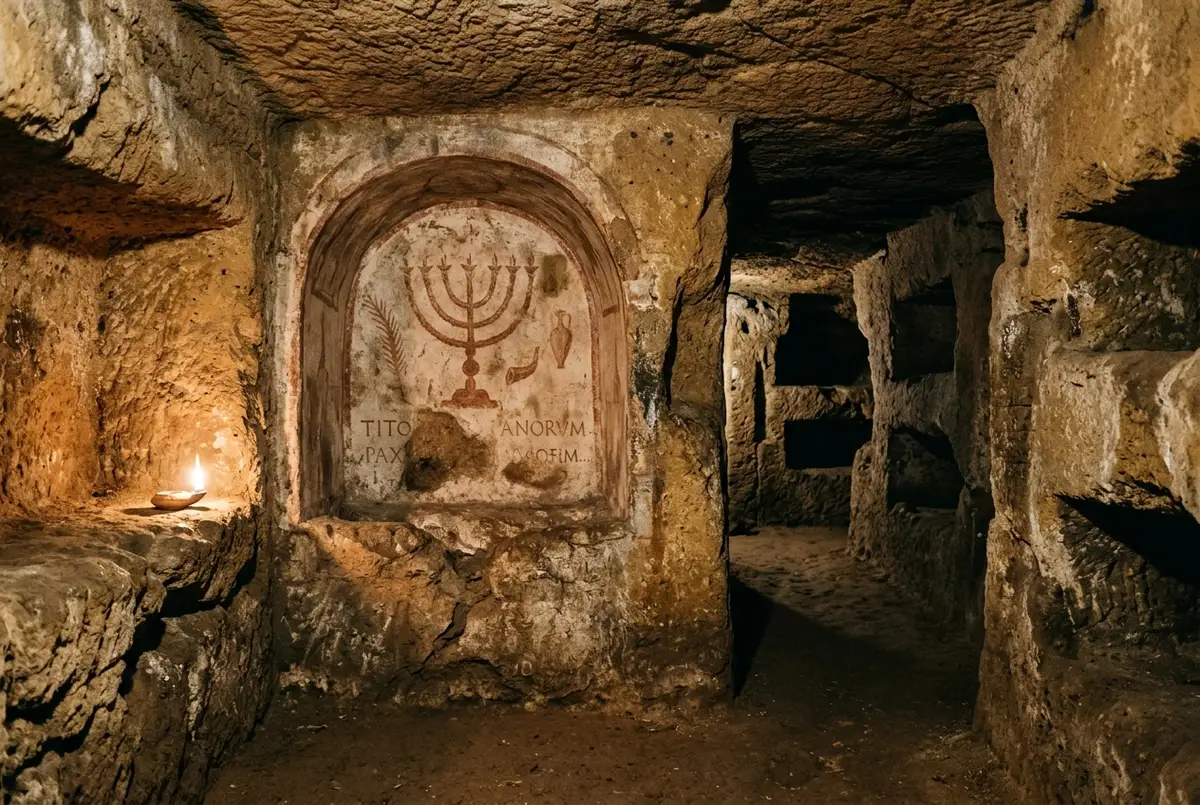
The symbols and language change, not the method. Vigna Randanini’s inscriptions are written only in Greek and Latin, never Hebrew, and its frescoes use Jewish imagery like the menorah and the ark of the law instead of Christian scenes.
That mix, Greek and Latin text paired with distinctly Jewish religious art, is the clearest marker that you’re looking at a different community’s cemetery, carved the same way into the same volcanic rock.
Questions
What countries have catacombs?
Italy has the best known network, but Malta, Paris, and parts of Egypt and North Africa also have historic underground burial sites, each dug for similar reasons of scarce land and growing cities.
Did Christians meet in catacombs?
The sources behind this page cover burial use only, not meetings or worship, so no verified claim about gatherings is made here.
Why did Christians bury their dead in catacombs?
Christians, like Rome’s Jewish community, buried their dead underground because land near the city was scarce and burial inside the walls wasn’t an option, so digging down let cemeteries keep growing.
What are the catacombs in Italy?
Rome holds the largest and best documented network, including Christian sites like San Callisto and Domitilla and the smaller Jewish sites at Villa Torlonia and Vigna Randanini.